
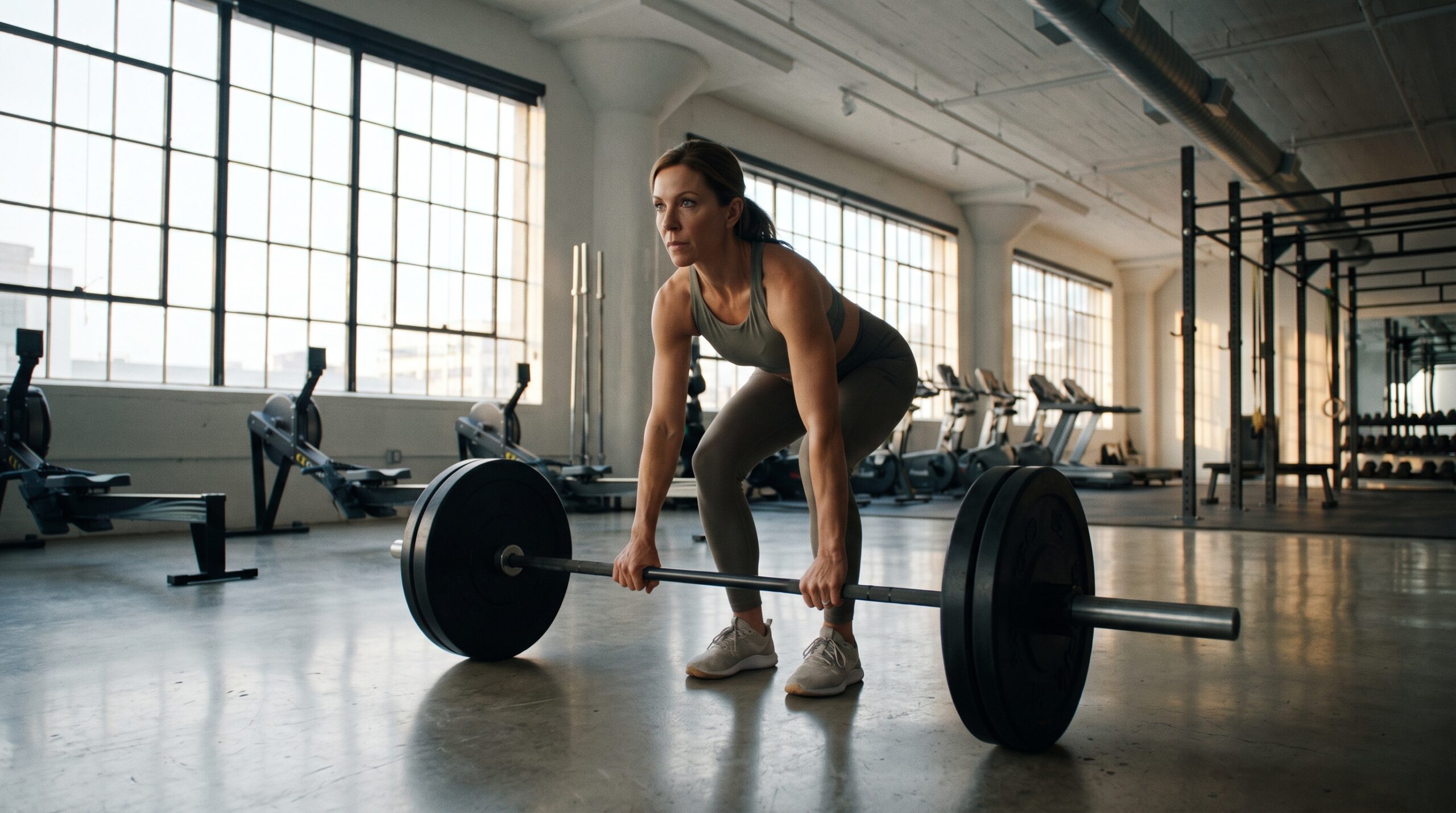
Navigating the profound physical changes of perimenopause requires a radical shift in how women approach fitness. As ovarian estrogen and progesterone production steadily declines—typically beginning in a woman’s late 30s or 40s—the body undergoes a neuroendocrine and musculoskeletal transition. During this period, traditional routines relying on light cardio and low-impact movement fail to stimulate the physiological adaptations needed to protect bone density and muscle mass. Today, recent clinical research definitively positions heavy, progressive strength training as the gold-standard intervention for female longevity. This comprehensive guide explores the science behind midlife musculoskeletal shifts and explains how optimizing your fitness and strength training routine can transform your health.
What is the Perimenopause Musculoskeletal Shift?
Perimenopause marks a period of significant hormonal fluctuation that directly impacts muscle synthesis, bone formation, and metabolic health. Estrogen acts as a master regulator for skeletal muscle and bone maintenance. When estrogen levels drop, the body’s musculoskeletal system becomes uniquely vulnerable to accelerated aging.
Three primary physiological mechanisms drive these changes:
-
Accelerated Muscle Loss (Sarcopenia): Estrogen is responsible for regulating muscle satellite cells—the stem cells required for muscle regeneration and growth. Estrogen withdrawal blunts satellite cell regenerative capacity by up to 60%, severely accelerating muscle loss (Dr. Stacy Sims).
-
Rapid Bone Demineralization (Osteopenia): Estrogen naturally suppresses osteoclastic activity, which is the process of bone breakdown. As hormones decline, bone resorption quickly outpaces bone formation, leading to sharp drops in bone mineral density.
-
Metabolic Reprogramming: The hormonal shift directly impacts insulin sensitivity and lipid oxidation. Clinical data from 2024 reveals that perimenopausal women exhibit 16% higher abdominal fat and approximately 7.1 kg greater total fat mass compared to their premenopausal counterparts (Dr. Stacy Sims).
Furthermore, hormonal volatility affects collagen synthesis and tissue hydration. According to a 2026 meta-analysis, 71% of perimenopausal women report musculoskeletal and joint pain, a symptom frequently misdiagnosed as standard aging rather than a treatable menopausal symptom (Beyond Physical Therapy).
The Cardio Trap vs. The Heavy Lifting Fix
For decades, women were prescribed “cardio-heavy, light-weight” workout models. However, sports physical therapists and exercise scientists warn that pushing through high-volume, low-intensity endurance workouts during perimenopause increases baseline cortisol. This exacerbates sleep disruption, increases visceral fat storage, and stresses vulnerable joint capsules and tendons (Physio On Miller, 2026).
Heavy resistance training provides the essential mechanical tension needed to replace the strength-building stimulus that estrogen previously provided.
“During menopause we lose the strength-building stimulus from estrogen… Resistance training is the best way to generate those muscle-making cells, and lifting heavy provides the strength-building stimulus you need as estrogen declines. Aim for 3 to 5 sets of 6 or fewer reps with full rest.” — Dr. Stacy Sims
The Clinical Evidence: Why Heavy Resistance Training Works
Clinical trials published between 2024 and 2026 provide undeniable evidence that high-intensity resistance training (lifting 70% to 85% of your one-rep max) actively reverses the negative effects of perimenopause.
-
Preserves and Builds Bone Mineral Density (BMD): The 2026 STOP-EM Trial demonstrated that lifting heavy two times per week over 9 months resulted in a +0.020 g/cm² increase in lumbar spine bone mineral density and boosted lean mass by 0.90 kg compared to control groups (Whitman et al., 2026).
-
Increases Lean Body Mass: A 2026 randomized controlled trial showed that 12 weeks of twice-weekly resistance training yielded a +1.05 kg increase in lean body mass and a massive +58.18 kg increase in leg strength (Pandit et al., 2026).
-
Enhances Muscle Quality: The EMPOWHER Trial revealed significant improvements in muscle cross-sectional area (+1.90 cm²) and enhanced fat-to-muscle density ratios after just six weeks of High-Intensity Resistance Training (HIRT) (DelBiondo, 2026).
During perimenopause, lifting heavy isn’t an extreme fitness trend—it is a physiological necessity to preserve muscle mass, protect bone mineral density, and maintain insulin sensitivity.
Guide to Starting Your Midlife Strength Routine
Transitioning to a heavy lifting program requires strategy, especially for women navigating joint stiffness or fatigue. Follow these foundational steps to build your musculoskeletal pension.
Step 1: Master Compound Movements
Focus on axially loaded compound lifts like squats, deadlifts, and overhead presses. These movements recruit multiple large muscle groups simultaneously, creating the highest mechanical demand on the skeletal system to stimulate bone formation. Working with a professional through personal training is highly recommended during this phase to ensure precise technique and prevent injury.
Step 2: Prioritize Low-Rep, High-Load Programming
To build muscle memory and epigenetic buffers, training intensity must be sufficiently high. Programs should focus on 3 to 6 repetitions per set, lifting loads between 75% and 85% of your 1-Repetition Maximum (1-RM). Rest periods should be full (2-3 minutes) to allow the central nervous system to recover, preventing unnecessary cortisol spikes.
Step 3: Integrate Autoregulation
Because perimenopause brings unpredictable energy and hormonal fluctuations, autoregulation is critical. Use a Rate of Perceived Exertion (RPE) scale to match your daily lifting intensity to your physiological readiness. On high-fatigue days, lower the load but maintain the mechanical pattern.
The Forge Training Advantage: Bridging Strength and Restorative Care
Implementing a heavy lifting protocol requires the right environment. Midlife women often face a divide: boutique studios that chronically insufficiently challenge skeletal muscle, or intimidating commercial gyms lacking clinical oversight. Forge Training bridges this gap by uniting professional strength coaching with on-site rehabilitation.
As a premier strength and conditioning gym in Victoria, BC, Forge has engineered an inclusive ecosystem specifically suited for sustainable midlife training.
Certified Coaching for Progressive Overload
Clinical research clearly highlights that adherence in midlife women is highest in socially supportive, supervised settings (Brynczka et al., 2025). Forge’s certified personal trainers expertly guide members past the common hesitancy to lift heavy. Coaches utilize personalized programming and RPE protocols to ensure every member safely masters compound barbell lifts at the necessary 70–85% threshold.
Integrated On-Site Rehabilitation
Recognizing that 71% of perimenopausal women experience joint stiffness and arthralgia, Forge integrates Registered Physiotherapy and Fascial Stretch Therapy (FST) directly into their facility. Because estrogen decline reduces tissue hydration and fascial glide, on-site FST is utilized to de-compress joints, release restricted myofascial chains, and down-regulate sympathetic nervous system stress (ProActive Physiotherapy, 2024). This rehab-strength bridge ensures that pre-existing pain is safely managed alongside strength acquisition.
Frequently Asked Questions
Does heavy lifting cause bulky muscle gain during perimenopause?
-
Because estrogen and testosterone levels are naturally lower during perimenopause, the body’s hormonal environment does not support “bulky” muscle hypertrophy easily. Instead, heavy strength training produces dense, metabolically active muscle that burns visceral fat and significantly increases physical strength.
How often should perimenopausal women strength train?
Current clinical studies suggest that two to three days per week of supervised, high-intensity resistance training is the optimal frequency to maximize bone mineral density and lean mass improvements without causing central nervous system burnout.
What if I have joint pain or stiffness?
Joint pain (arthralgia) is a common symptom of estrogen withdrawal. Pushing through pain can lead to injury, which is why a combined approach is best. Utilizing integrated on-site rehab alongside guided lifting ensures your joints are decompressed and prepared for load.
Conclusion
Cardio burns calories during the session, but heavy resistance training builds the metabolic engine that protects midlife women 24/7. By actively replacing the strength-building stimulus of estrogen with heavy, progressive mechanical tension, women can effectively counter bone demineralization, manage visceral fat, and eliminate functional decline. Whether you are navigating early perimenopause or are fully post-menopausal, taking an integrated, science-first approach to fitness will safeguard your long-term health. By uniting expert coaching with dedicated restorative therapies, finding the right supportive gym in Victoria, BC, can empower you to lift heavy, recover fast, and thrive.