
Endurance athletes do not get injured from running or cycling too much; they get injured because their musculoskeletal system lacks the load-bearing capacity to tolerate the volume they demand of it. For runners, cyclists, and triathletes, prioritizing heavy strength training is the most scientifically validated method to prevent overuse injuries, enhance running economy, and sustain late-race power. Whether you are prepping for the Royal Victoria Marathon or tackling the Tour de Victoria, integrating comprehensive fitness and strength training is what separates durable athletes from those sidelined by chronic pain.
This guide breaks down the biomechanical wear-and-tear of endurance sports, explains the modern sports science behind heavy lifting for aerobic athletes, and provides a structured framework for building durability and power without adding unwanted bulk.
What is Sagittal Monoculture in Endurance Sports?
Sagittal monoculture refers to the practice of training exclusively through linear, repetitive, forward-moving motions without multidirectional or heavy resistance loading. Endurance sports operate almost entirely in this single plane of motion with low peak forces repeated tens of thousands of times.
To understand the cost of this repetitive volume, consider the math:
-
A runner absorbs 2.5 to 3 times their body weight with every single step, averaging 1,500 to 1,800 footstrikes per mile.
-
A cyclist pedalling at 90 RPM executes 5,400 pedal revolutions per hour, heavily engaging the quadriceps while leaving stabilizing hip muscles under-recruited.
According to a systematic review published in the Journal of Sport and Health Science, the overall injury incidence in runners is an alarming 40.2%. The leading pathologies—Patellofemoral Pain Syndrome (runner’s knee), Achilles Tendinopathy, Shin Splints, and IT Band Syndrome—are fundamentally overuse injuries rooted in structural underloading.
Research published in Physical Therapy Korea highlights that when endurance athletes lack multidirectional loading, the gluteus medius and hip abductors become weak or inhibited. This weakness causes dynamic knee valgus and contralateral pelvic drop, forcing the quadriceps and tensor fasciae latae (TFL) to become dominant and pull painfully on the knees and IT band.
How Does Heavy Resistance Training Improve Endurance?
Contrary to the persistent myth that lifting weights creates slow, bulky athletes, recent sports science demonstrates that heavy resistance training (80-90% of 1RM) drives positive neuromuscular adaptations without inducing significant hypertrophy or decreasing VO2 Max. Instead of replacing outdoor miles with indoor gym cardio training, athletes see massive benefits by combining aerobic work with high-load lifting.
The physiological adaptations include:
-
Increased Musculotendinous Stiffness: Heavy loading increases the stiffness of the Achilles and patellar tendons, allowing the lower limb to act like a coiled spring that returns passive kinetic energy with every footstrike.
-
Enhanced Motor Unit Recruitment: High loads force the central nervous system to recruit high-threshold Type IIa muscle fibres, making them more fatigue-resistant over long distances.
-
Delayed Neuromuscular Fatigue: In the final kilometres of a race, a strength-trained athlete can seamlessly recruit fast-twitch fibres to sustain power even when slow-twitch fibres are metabolically exhausted.
Clinical Evidence for Runners and Cyclists
A 2024 systematic review and meta-analysis in Sports Medicine found that high-load strength training significantly reduces the oxygen cost of submaximal running, improving running economy across multiple speeds. A broader 2024 analysis, also in Sports Medicine, confirmed these protocols directly improve time trial performance and sprint finish capacity.
For cyclists, a landmark trial in The Journal of Strength and Conditioning Research demonstrated that 8 weeks of heavy half-squats resulted in a 4.8% improvement in cycling economy and a 17.2% increase in time to exhaustion at maximal aerobic power—with absolutely zero increase in body mass. Furthermore, research on elite cyclists in the Scandinavian Journal of Medicine and Science in Sports showed that heavy lifting shifts the occurrence of peak pedalling torque significantly earlier in the downstroke, optimizing mechanical efficiency.
The 3-Pillar Strength Framework for Endurance Athletes
To translate these academic findings into athletic gains, an endurance strength program must prioritize three distinct movement pillars.
Pillar 1: Compound Barbell Lifting (Maximal Force Capacity)
Heavy compound loading builds the structural chassis and thickens cortical bone density, which is particularly critical for female and masters runners at risk for stress fractures.
-
Key Movements: Trap bar deadlifts, barbell back/front squats, standing overhead presses.
-
Execution: 3–5 sets of 3–6 reps at 80-85% 1RM. Long rest periods (2–3 minutes) ensure neural recruitment without metabolic exhaustion.
Pillar 2: Unilateral Strength Work (Asymmetry Correction)
Running is effectively a sequence of rapid single-leg hops, and cycling alternates independent single-leg power phases. Unilateral loading forces the gluteus medius and adductors to stabilize the pelvis in the frontal plane, eliminating hip drop.
-
Key Movements: Bulgarian split squats, single-leg Romanian deadlifts (RDLs), heavy box step-ups.
Pillar 3: Posterior Chain Armor (Quad Dominance Correction)
Cyclists spend hours in deep hip flexion, while runners frequently over-rely on knee extension. Developing the posterior chain provides horizontal propulsion for climbing hills while sparing the anterior knee joint.
-
Key Movements: Barbell RDLs, barbell hip thrusts, Nordic hamstring curls.
How to Schedule Strength Training Around Aerobic Volume
For an athlete logging 6–10 aerobic hours weekly, the goal is concurrent training that minimizes interference. The golden rule is to keep hard days hard—lift on the same day as (or preceding) high-intensity interval sessions, leaving recovery days purely for recovery.
|
Training Day |
Aerobic Focus |
Gym Focus |
Purpose |
|---|---|---|---|
|
Monday |
Rest or easy recovery spin |
Heavy Bilateral & Core |
Trap bar deadlifts and overhead presses to build maximal force. |
|
Tuesday |
Track intervals / threshold ride |
None |
Execute intense endurance work while fresh. |
|
Wednesday |
Zone 2 aerobic base miles |
Mobility |
Foam rolling and active recovery. |
|
Thursday |
Tempo run / sweet-spot cycling |
Unilateral & Posterior Chain |
Split squats and RDLs to stabilize the pelvis and correct imbalances. |
|
Friday |
Easy recovery run / spin |
None |
Complete neural and muscular recovery. |
|
Saturday |
Long distance endurance |
None |
Primary endurance volume day. |
|
Sunday |
Active recovery / Rest |
None |
Allow tissue repair. |
Choosing the Right Gym in Victoria for Endurance Strength
Victoria is a premier training ground for endurance athletes, featuring iconic routes like the Galloping Goose trail and Mount Tolmie. However, while local athletes frequently log high mileage, many neglect structural conditioning because traditional fitness centres lack the right equipment or programming.
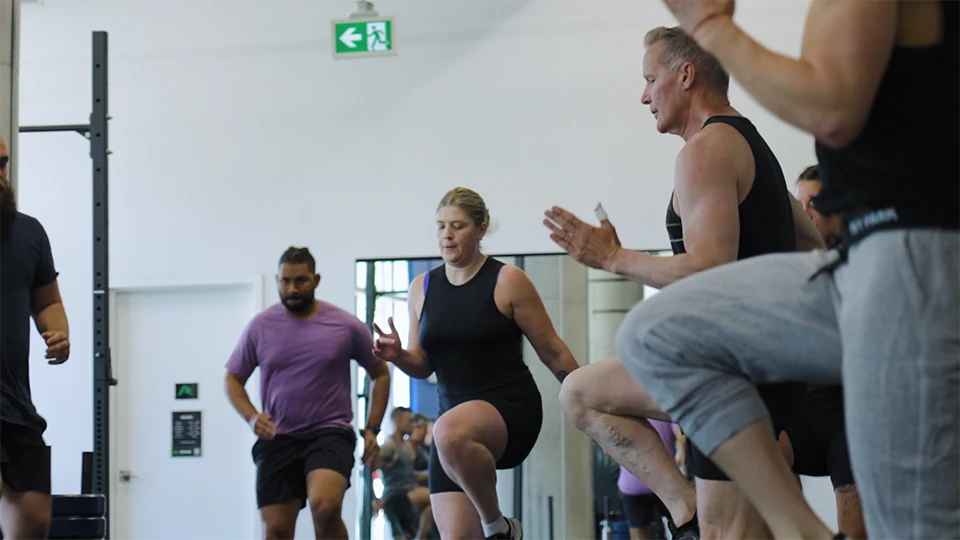
Forge Training, located in downtown Victoria, is specifically engineered to bridge this gap. Rather than rows of elliptical machines, the facility provides purpose-built equipment for progressive barbell and unilateral loading—power racks, Olympic barbells, trap bars, and open turf space.
What sets this facility apart for the endurance community is its integration of on-site rehabilitation and performance coaching. Athletes dealing with active niggles like Achilles tendinopathy or lower back stiffness can transition seamlessly between clinical injury rehab and progressive athletic programming. Through small group strength classes and personal training, coaches ensure proper biomechanics and load management, guaranteeing athletes build durability without compromising their weekly endurance schedule.
Conclusion
The science is clear: heavy resistance training expands the structural ceiling of runners and cyclists. By incorporating compound lifting and unilateral stability work, endurance athletes can drastically reduce their risk of overuse injuries while unlocking measurable improvements in running economy and cycling power. For local athletes, stepping off the trail and into a dedicated gym in Victoria like Forge Training provides the vital strength foundation required to turn aerobic capacity into sustainable, pain-free speed.