
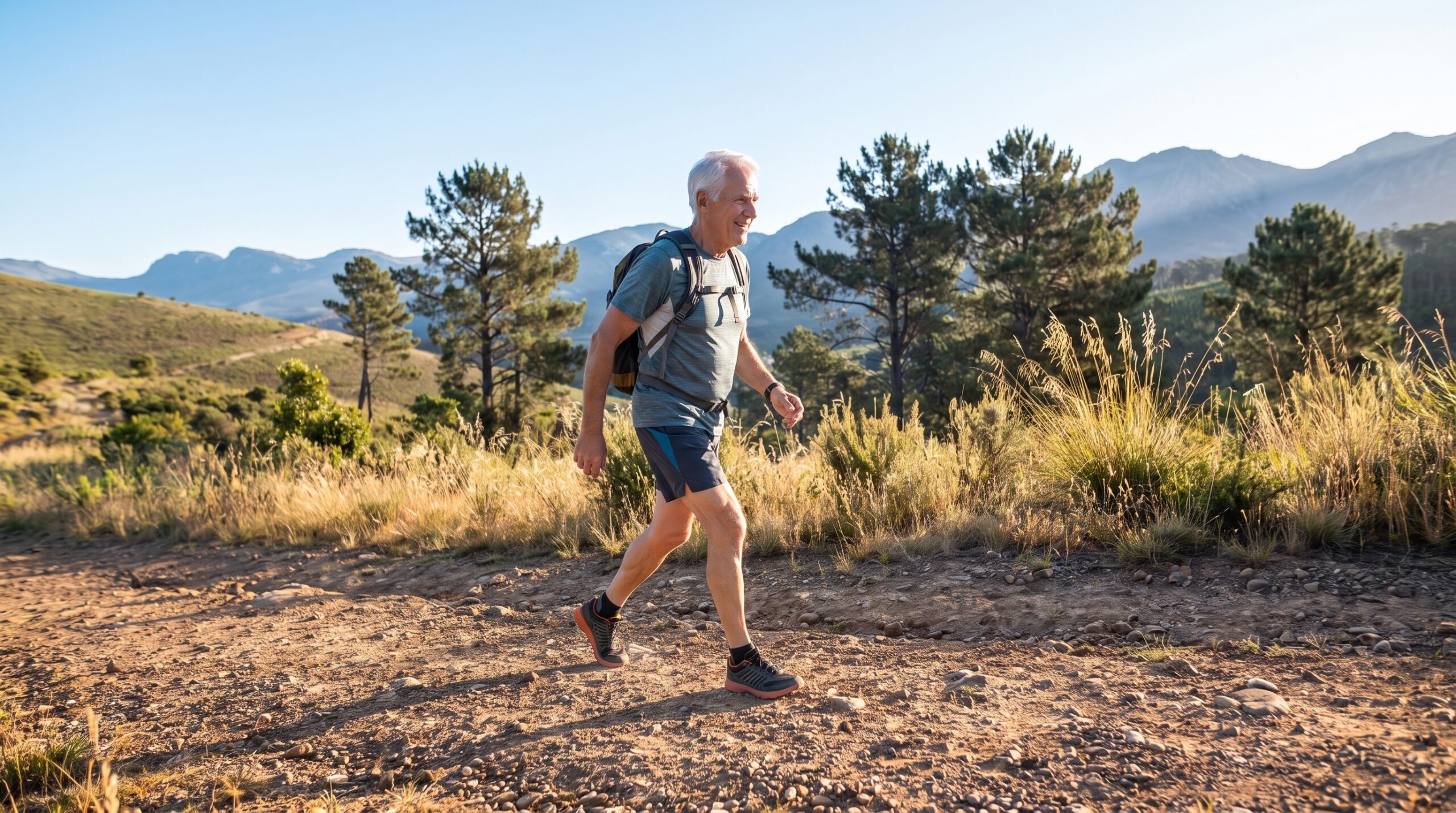
As modern medicine shifts its focus from merely extending lifespan to maximizing healthspan—the period of life spent free from chronic disease and disability—skeletal muscle mass and neuromuscular power have emerged as primary biomarkers of biological vitality. The involuntary loss of muscle mass and physical strength represents a major driver of functional dependence, metabolic dysfunction, and fall-related injuries in aging adults.
Epidemiological and clinical evidence confirms that progressive strength training is the most potent, non-pharmacological intervention available to halt neuromuscular decay, preserve bone mineral density, and maintain autonomy. This comprehensive guide explores the science of longevity and outlines how older adults can safely bridge the gap between clinical rehabilitation and real-world progressive lifting.
What is Sarcopenia and Dynapenia?
Sarcopenia is the age-related, involuntary loss of skeletal muscle mass, while dynapenia refers to the disproportionate loss of muscular strength. Human muscle mass reaches its peak between ages 20 and 30. Without targeted mechanical stimulation, biological decline accelerates predictably.
According to Scientific Reports (2025), muscle tissue atrophies at an average rate of 8% per decade between ages 40 and 70, and this rate increases to 10% to 15% per decade after age 70. However, muscular strength declines two to three times faster than muscle mass. After age 70, individuals lose 25% to 35% of their functional strength per decade.
This rapid loss is driven by the preferential atrophy of Type II (fast-twitch) muscle motor units. These fast-twitch fibers are essential for rapid force development, such as bracing during a stumble or stabilizing joints under sudden loads.
How Progressive Lifting Extends Healthspan
Muscular strength is not an aesthetic luxury; it is primary metabolic and physical armor against biological aging. To fully realize these longevity benefits, your approach to strength and training must strictly adhere to the principles of specificity, mechanical overload, and progression.
Recent clinical data from 2026 and major meta-analyses highlight the profound medical impact of lifting weights:
-
Mortality Risk Reduction: Engaging in 30 to 60 minutes per week of muscle-strengthening activities yields a 10% to 20% reduction in all-cause mortality, cardiovascular disease, and cancer mortality, according to the British Journal of Sports Medicine. Conversely, possible sarcopenia is associated with a 77% to 79% higher risk of all-cause mortality (Frontiers in Nutrition, 2026).
-
Bone Mineral Density (BMD): Static or light cardiovascular activities fail to stimulate bone remodeling. Progressive resistance loading increases hip and femur bone mineral density by +2.77% in older adults (Sports Medicine), successfully combating osteopenia and osteoporosis.
-
Fall and Fracture Prevention: Structured resistance and balance exercise programs reduce fall-related fractures in older adults by 26% (BMC Geriatrics Meta-Analysis).
-
Functional Independence: High-intensity progressive resistance training produces substantial improvements in functional benchmarks, such as rising from a chair, preserving daily autonomy (Cochrane Database of Systematic Reviews).
Expert Frameworks for Aging Athletics
Leading longevity medicine specialists emphasize that physical strength is the strongest predictor of healthspan. Dr. Peter Attia advocates for the “Centenarian Decathlon,” a framework of reverse-engineering physical capacity. To perform daily tasks like carrying groceries or getting off the floor unassisted at age 85, an individual must intentionally build substantial muscular reserve in their 40s, 50s, and 60s (Attia, 2025).
Two critical biomechanical metrics stand out in the pursuit of longevity:
-
Grip Strength: Handgrip strength serves as a clinical proxy for whole-body motor recruitment and kinetic chain health. A compromised grip often mirrors systemic frailty (Attia, 2022).
-
Eccentric Deceleration: The highest risk factor for catastrophic injury in older adults is lacking the eccentric strength (the capacity of the quadriceps and glutes to decelerate the body) required to absorb a fall.
Crucially, it is never too late to start. Landmark nonagenarian trials have demonstrated that adults aged 90 and older can achieve strength increases of over 100% within 8 to 12 weeks of structured training, proving that neuromuscular plasticity persists across the entire human lifespan (Law et al., 2015).
The “Discharge Void” in Traditional Healthcare
A pervasive obstacle in geriatric health is the disconnect between clinical recovery and athletic independence. When older adults experience joint pain or undergo surgery, conventional clinical rehabilitation typically ends once basic, pain-free range of motion is restored.
Patients are frequently discharged with no structured preparation for the multi-planar, high-load requirements of independent living. This “Discharge Void” leads to inactivity, fear of re-injury, and accelerated sarcopenia. Light-load recreation, such as walking or using light resistance bands, fails to elicit the neuroendocrine or osteogenic adaptations necessary for longevity (Age and Ageing, 2022).
Bridging the Gap: The Integrated Longevity Continuum
Overcoming the discharge void requires a multi-tiered ecosystem that seamlessly blends clinical care with professional strength coaching. Located in downtown Victoria, BC, Forge Training operates precisely at this intersection, providing an integrated care continuum that keeps older adults lifting safely.
For aging lifters looking for an accessible gym in Victoria, the safest progression follows a structured, four-step continuum:
1. Clinical Assessment and Tissue Desensitization
The process begins with direct clinical evaluation. On-site clinical rehabilitation, including Physiotherapy, Athletic Therapy, and Registered Massage Therapy (RMT), identifies kinetic asymmetries and resolves acute symptomatic pain.
2. Movement Pattern Re-Education
Before loading heavy weights, individuals transition from passive clinical tables to fundamental human movement patterns: squatting, hinging, pushing, pulling, and loaded carrying. This builds confidence and establishes joint stability.
3. Structured Progressive Overload
This is where mechanical adaptation occurs. Through expert personal training at Forge, coaches calibrate volume, load, and velocity. Movements are tailored to individual joint anatomy—for example, utilizing box squats for knee preservation or trap bar deadlifts for spine mechanics—systematically increasing motor unit recruitment without joint irritation.
4. Autonomous Longevity Lifting
The ultimate goal is confident participation in an open gym environment. With an inclusive community and professional coaching standards, older adults can maintain their progressive lifting routines autonomously, knowing that clinical support is available on-site if mobility restrictions re-emerge.
Building Your Physical Armor
Protecting your independence as you age requires shifting the perspective on exercise. It is not merely about staying active; it is about intentional, progressive adaptation. Progressive resistance training is the only known intervention capable of reversing dynapenia and preserving total physical autonomy into late life. By integrating clinical oversight with high-quality strength training, adults can build the physical armor necessary for a resilient, highly functional lifespan.