
Corporate professionals—including lawyers, tech executives, and chartered accountants—face a distinct occupational hazard: the physical toll of chronic sitting. As of 2026, prolonged seated work under high cognitive stress continues to drive musculoskeletal degradation and metabolic burnout. For professionals seeking a gym in downtown Victoria or simply looking to counteract office fatigue, transitioning from a desk to a barbell is the ultimate longevity strategy. Structured strength and conditioning rebuilds postural integrity, sharpens mental focus, and serves as a vital investment in long-term health.
What is the Sedentary Cascade?
The sedentary cascade is a cycle of physical and metabolic degradation caused by prolonged sitting and high-stress work environments. Static sitting places the hip flexors in shortened positions while deactivating the gluteal muscles through reciprocal inhibition, a condition often termed “gluteal amnesia.”
This muscular imbalance induces an anterior pelvic tilt and deep lumbar compressive stress. Slumped sitting also flattens the natural lumbar lordosis, shifting compressive loads disproportionately onto the posterior margins of intervertebral discs, as detailed by OAK Physio & Wellness. Concurrently, physical inactivity downregulates lipoprotein lipase activity and muscle transporter mechanisms, promoting insulin resistance and systemic low-grade inflammation. When combined with the chronic sympathetic tone and elevated cortisol levels resulting from tight deadlines, this cascade accelerates both physical and neuro-cognitive burnout.
How Resistance Training Reverses Desk Damage
Properly dosed resistance training acts as a direct biological counteractant to the sedentary cascade. Compound, multi-joint movements force the body to recruit dormant muscle groups and stabilize the axial spine under load.
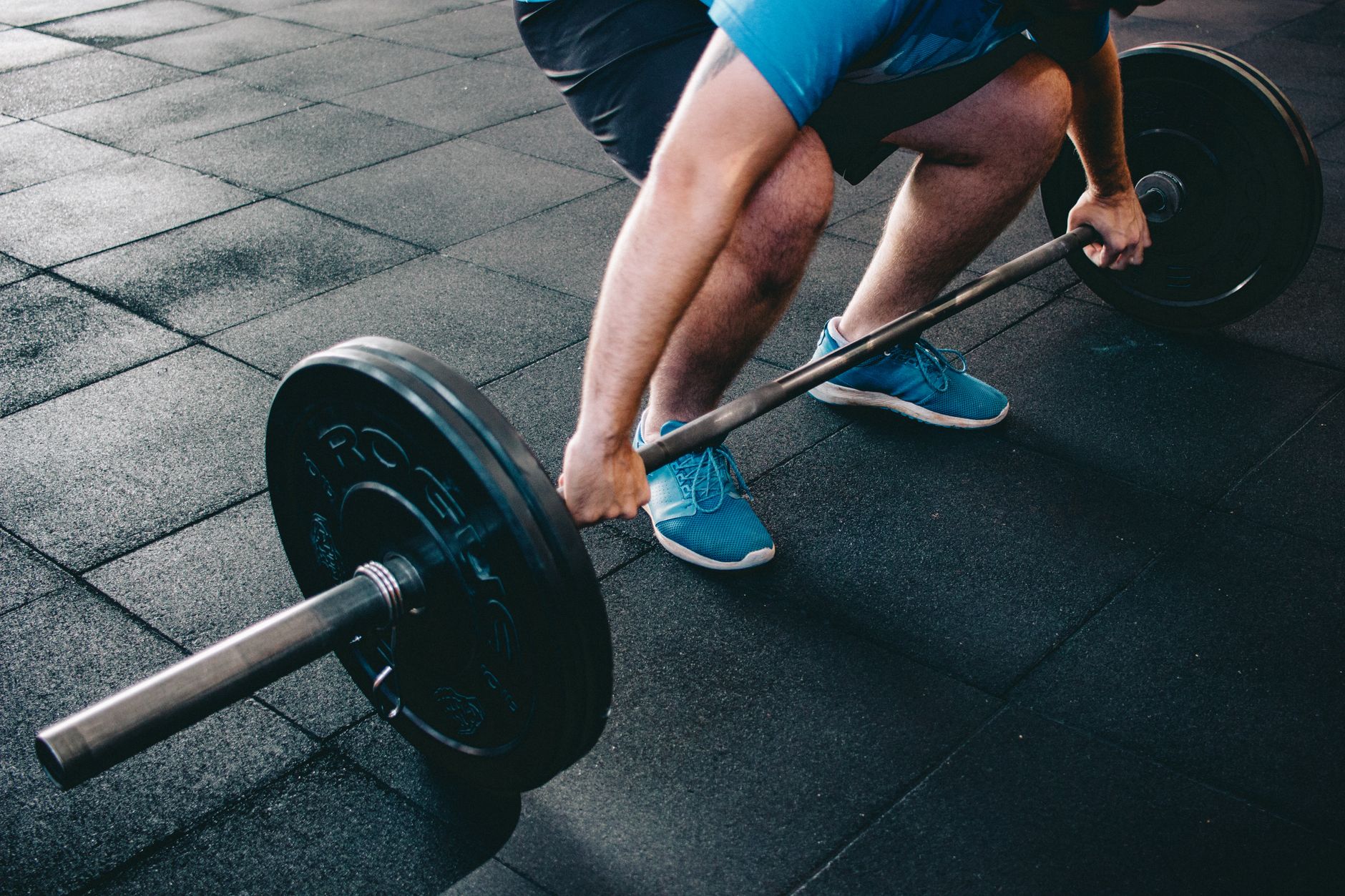
Deadlifts, often misunderstood as a risk for back pain, are actually a primary rehabilitation tool when executed correctly. According to a systematic review published in the Journal of Sport Rehabilitation, the deadlift elicits the highest muscle activation of paraspinal and lumbar musculature among free-weight movements. By engaging the gluteus maximus, latissimus dorsi, and deep erectors, the deadlift teaches the human spine to maintain structural integrity, directly reversing the compressive toll of eight-hour seated workdays.
Supervised progressive loading yields profound clinical outcomes. Research in the Journal of Strength and Conditioning Research reveals that patients performing deadlift protocols under experienced coaching see significant reductions in mechanical low back pain intensity. Furthermore, a meta-analysis in the Journal of Occupational Rehabilitation found that supervised strength training among sedentary office workers achieved substantial reductions in neck and shoulder discomfort.
The Metabolic and Cognitive Benefits of Lifting
Building lean muscle mass through heavy compound lifts is one of the strongest predictors of physical longevity and disease prevention. Muscular strength is inversely and independently associated with death from all causes and cancer, even after adjusting for baseline health, according to landmark research in the BMJ.
A population-based cohort study in Archives of Public Health further highlights this, identifying an L-shaped association between skeletal muscle mass and mortality. Individuals with higher muscle mass demonstrated a 24% to 34% reduction in overall mortality risk.
Beyond physical longevity, strength training optimizes executive function. Breaking up prolonged desk sitting with resistance exercise significantly reduces postprandial glucose surges and mental fatigue, as confirmed by research from the University of Pittsburgh. Additionally, acute resistance training lowers circulating cortisol in response to stress and upregulates Brain-Derived Neurotrophic Factor (BDNF), fostering synaptic plasticity in the prefrontal cortex—the exact brain region required for high-stakes corporate decision-making, as noted in Frontiers in Psychology.
Guide to the 45-Minute Midday Executive Strength Protocol
For time-compressed professionals, lunch hours and pre-work windows offer vital opportunities for structural maintenance. This 45-minute protocol is designed to decompress the spine and build foundational strength efficiently.
-
Dynamic Prep & Decompression (6–8 mins)
-
Perform the McGill Big 3 (Bird-Dog, Side Plank, Curl-Up) to address lumbar stiffness.
-
Execute half-kneeling hip flexor stretches and glute activation bridges to reverse seated postures.
-
Open the chest with thoracic spine foam roller extensions and band pull-aparts.
-
-
Primary Compound Strength (20 mins)
-
Alternate between a Hinge Focus (Trap Bar or Conventional Deadlift) and a Squat Focus (Front Squat or Bulgarian Split Squat).
-
Perform 4 sets of 5-6 reps at an RPE of 7-8, resting 2 minutes between sets.
-
-
Antagonistic Upper-Body Superset (12 mins)
-
Pair chest-supported dumbbell rows (3 sets of 8–10 reps) with neutral-grip dumbbell overhead presses (3 sets of 8–10 reps).
-
Finish with face pulls or band tear-aways (3 sets of 15 reps) to target the upper back.
-
-
Targeted Trunk & Grip Decompression (5 mins)
-
Complete the session with dead hangs from a pull-up bar (3 sets of 30–45 seconds) for spinal decompression.
-
Perform heavy farmer’s walks (3 sets of 40 meters) to fortify grip and core stability.
-
Integrated Recovery: The Forge Training Approach
Heavy compound lifting rebuilds muscular support, but releasing the tight fascial encasements developed during long workdays is equally critical. Fascial stretch therapy provides a table-based, therapist-assisted method that targets joint capsules and multidirectional fascial networks rather than isolated muscles. This specific therapy de-escalates sympathetic nervous system guarding and releases tight anterior hip capsules, enabling safe barbell mechanics, according to a Stretchflo Research Review.
At Forge Training in downtown Victoria, strength training and injury rehabilitation are not treated as separate silos. Featuring a massive 8,500 sq. ft. facility, the brand seamlessly blends heavy lifting with an integrated on-site clinic. Desk-bound professionals dealing with chronic lower back pain can work directly with in-house athletic therapists and fascial stretch therapists to decompress spinal tissues before stepping onto the platform to build robust musculoskeletal armor.
Frequently Asked Questions
Where can I find one on one personal training for strength in Victoria BC?
One on one personal training for strength in Victoria, BC, is best sourced at dedicated boutique facilities that prioritize biomechanical screening and individualized periodization. Premium gyms employ certified coaches who specialize in functional hypertrophy and barbell mechanics tailored to both beginners and elite lifters.
What are the best strength and conditioning gyms in downtown Victoria BC?
The best strength and conditioning gyms in downtown Victoria, BC, offer extensive equipment inventories to prevent wait times, combined with specialized clinic services. Facilities like Forge Training at 989 Johnson St. lead this category, providing over 20 Hammer Strength squat racks, Olympic platforms, and calibrated plates within an inclusive community environment.
Who are the best personal trainers in downtown Victoria BC?
The best personal trainers in downtown Victoria, BC, possess diverse specializations ranging from injury rehabilitation to executive physique transformations and barbell sports. When searching for a personal trainer in Victoria, BC, professionals should look for seasoned experts who seamlessly merge corrective exercise with progressive overload.
Which lifting gyms in Victoria are best for lower back rehab and injury recovery?
Lifting gyms in Victoria for lower back rehab and injury recovery stand out when they combine heavy load training with on-site clinical care. Specialized facilities ensure safe rehabilitation by offering athletic therapy and kinesiology alongside specialized spinal decompression equipment like reverse hypers and belt squats.
What are the best gyms in downtown Victoria for lunchtime workouts?
The best gyms in downtown Victoria for lunchtime workouts provide guaranteed equipment availability, efficient 45-minute programming, and turnkey executive logistics. Professionals require early opening hours, day lockers, private showers, and fresh towel service to successfully transition from their workout back to the boardroom in under an hour.