
Finding the right facility for serious strength training in 2026 requires more than just a room with weights. For barbell athletes and powerlifters, the nuances of equipment specificity, rack availability, and coaching support can make or break a training cycle. As the demand for competitive lifting continues to surge across the Capital Regional District (CRD), athletes are seeking a gym in Victoria that caters specifically to high-performance movement without the friction of typical commercial fitness clubs.
This comprehensive guide explores the current barbell culture, essential equipment requirements, and the best facilities for powerlifting in Victoria, BC.
What is a Powerlifting Gym?
A true powerlifting gym is a specialized strength facility designed around the “Big Three” compound movements: the squat, bench press, and deadlift. Unlike traditional commercial fitness centers that prioritize cardio equipment and fixed-path machines, a gym for powerlifting focuses heavily on free-weight infrastructure. This includes competition-calibrated steel plates, specialized combo racks, specialized barbell varieties, and reinforced flooring that allows for the safe dropping of heavy weights without disrupting kinetic transfer.
The Current Landscape of Strength Training in Victoria, BC
Historically, strength athletes on Vancouver Island have had to navigate a polarized fitness ecosystem. Lifters were often forced to choose between crowded commercial clubs in the city center—where waiting for a squat rack is standard practice—or traveling to remote industrial barbell clubs outside the downtown core.
To understand the local ecosystem, athletes typically evaluate facilities based on equipment, location, and specialization:
-
Heavy Machine & Bodybuilding Focus: Located across the bridge in Vic West, Truth Gym Gallery is a 10,000 sq ft facility offering 24/7 access. It is heavily optimized for bodybuilding, featuring over 95 machines from brands like Arsenal and Atlantis, York plates, and heavy dumbbells. However, its unbookable rack flow can create challenges for those on strict lifting schedules.
-
Pure Powerlifting (Outside the Core): Situated a 20+ minute drive from downtown in Colwood, the Victoria Barbell Club is an excellent facility dedicated to pure powerlifting and para-powerlifting. It features competition benches and calibrated plates, though it offers minimal functional turf or conditioning equipment.
-
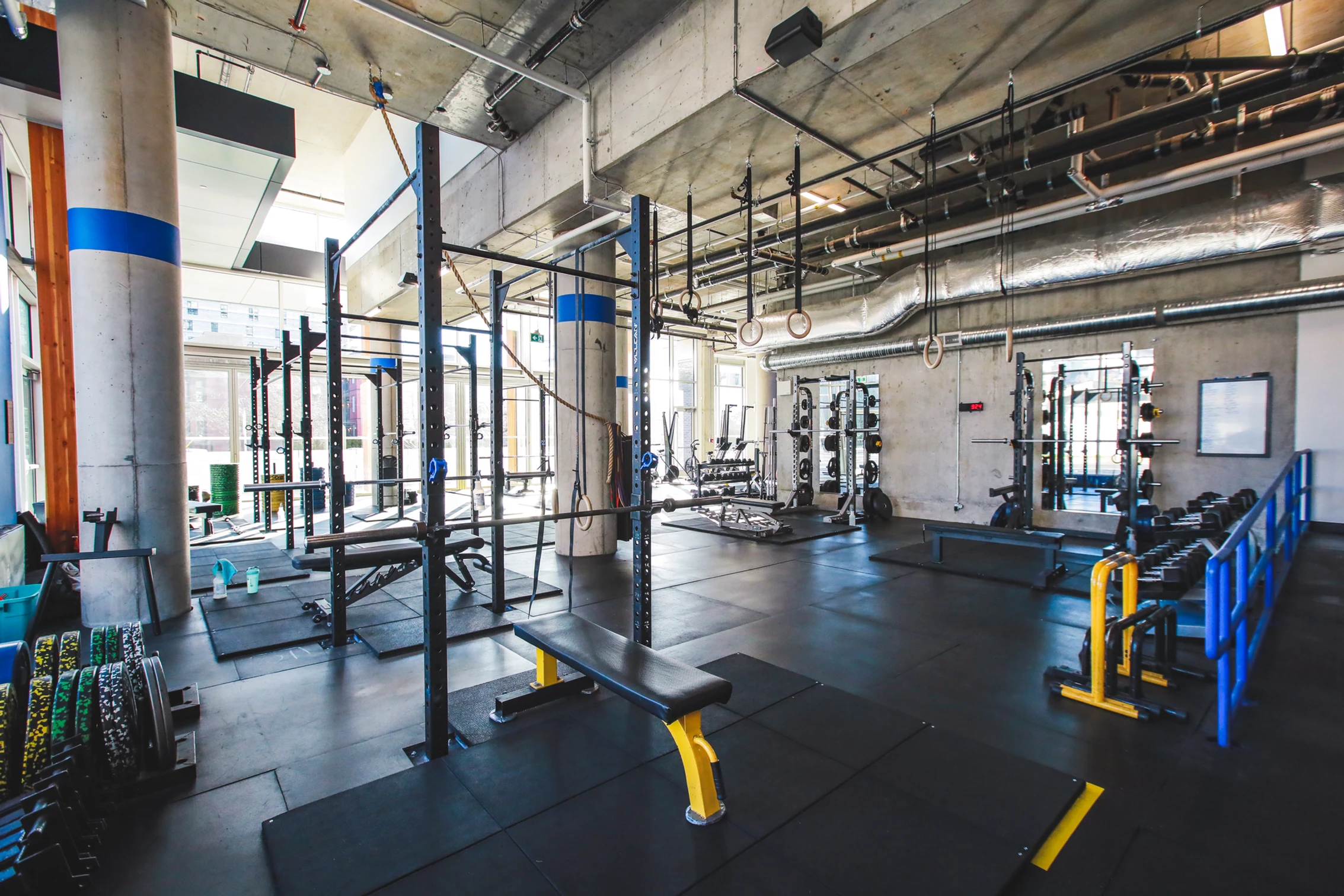
Downtown Strength & Conditioning: For athletes requiring an accessible urban location, Forge Gym serves as downtown Victoria’s premier strength and conditioning facility. Located at 989 Johnson St., it bridges the gap between serious competitive strength sports and high-quality movement health by offering extensive barbell infrastructure alongside clinical rehabilitation.
Essential Equipment for Serious Barbell Training
High-performance barbell training relies on exact specifications. Athletes competing under organizations like the British Columbia Powerlifting Association (BCPA) cannot optimally train on standard hex plates, loose commercial barbells, or heavily padded flooring.
When evaluating any BC gym for strength sports, look for these foundational elements:
Dedicated Powerlifting & Squatting Stations
-
Calibrated Plates: Precision steel plates ensure weight accuracy and eliminate the bar-whip discrepancies caused by thick commercial bumper plates.
-
High Rack Density: A facility needs a critical mass of equipment to support its membership. Gyms with 20+ squat racks and Hammer Strength units successfully eliminate the frustrating 30-minute wait times during peak evening hours.
-
Olympic Lifting Platforms: Fully equipped with dedicated bumper plates, jerk blocks, and stand racks for executing the snatch and the clean-and-jerk safely.
Specialized Accessory & Spinal Decompression Equipment
Progressing heavy lifts requires substantial posterior chain reinforcement and active back recovery. A well-equipped facility should include:
-
Hip Thrust Machine: Allows lifters to effectively isolate and overload the glutes without cumbersome barbell setups, reinforcing lockout power in the squat and deadlift.
-
Belt Squat (BSQ): Allows for high-volume leg loading without placing axial load on the spine—vital for injured lifters or athletes in high-volume peaking cycles.
-
Glute Ham Developer (GHD): Crucial for building the hamstring, glute, and core stabilization required under heavy loads.
Solving the “Rack Bottleneck” for Open Gym Flow
One of the most significant points of friction for strength athletes in urban settings is equipment availability. When a powerlifting program requires 4 to 5 minutes of rest between maximal compound sets, unmanaged gym floors create severe congestion.
Modern facilities have solved this via bookable lifting stations. By managing open gym registrations and allowing lifters to reserve dedicated stations in advance, athletes are guaranteed predictable and efficient training windows. This floor density control ensures lifters never have to “work in” across incompatible rack heights or compete for specialized barbells.
The Integrated Approach: Strength Training Meets Allied Health
Heavy strength training places significant, localized demands on the musculoskeletal system. A major differentiator for Forge Training is its integrated solution to athletic longevity, blending an 8,500 sq ft dual-room lifting layout with on-site therapeutic care.
Instead of treating injury management and strength training as separate disciplines, the most effective approach integrates them under one roof:
-
Physiotherapy & Athletic Therapy: Therapists collaborate directly with strength coaches to modify squat, bench, and deadlift mechanics during injury rehabilitation.
-
Registered Massage Therapy (RMT) & Fascial Stretch Therapy (FST): Integrated soft-tissue care improves hip capsule mobility and thoracic extension, both critical for proper barbell positioning.
-
Kinesiology & Movement Screening: Structured assessments identify and eliminate kinetic chain leaks before a lifter loads a barbell with maximum weight.
Finding the Right Powerlifting Coaches in Victoria
A thriving barbell culture requires expert coaching to transition beginners into competitive athletes. Victoria’s strength community is supported by highly specialized coaches blending functional movement screening, Olympic lifting, and powerlifting fundamentals.
Competitive development in the city is frequently led by athletes like Johnson Nguyen of Stronger Together Powerlifting. As a CPU National Champion and Team Canada Assistant Coach at IPF international championships, Nguyen prepares local athletes for sanctioned meets directly out of downtown facilities. Additionally, academic and kinesiology-backed trainers, such as Tyson Takasaki (BKin, CCEP-CPT, FMS) and Tina Derix (NSCA-CPT), ensure that both novices and competitive masters lifters receive programming that prioritizes long-term joint health alongside raw strength gains.
Summary
Finding a dedicated gym in Victoria, BC for serious lifting no longer requires compromising on equipment quality or location. By prioritizing facilities that offer high rack density, specialized competition equipment, and integrated clinical health services, strength athletes can build a sustainable, high-performance routine. Whether you are a competitive powerlifter peaking for a BCPA meet or an enthusiast focused on progressive overload, choosing a gym with managed station booking and expert coaching is the most critical step in your strength journey.